
Self-paced
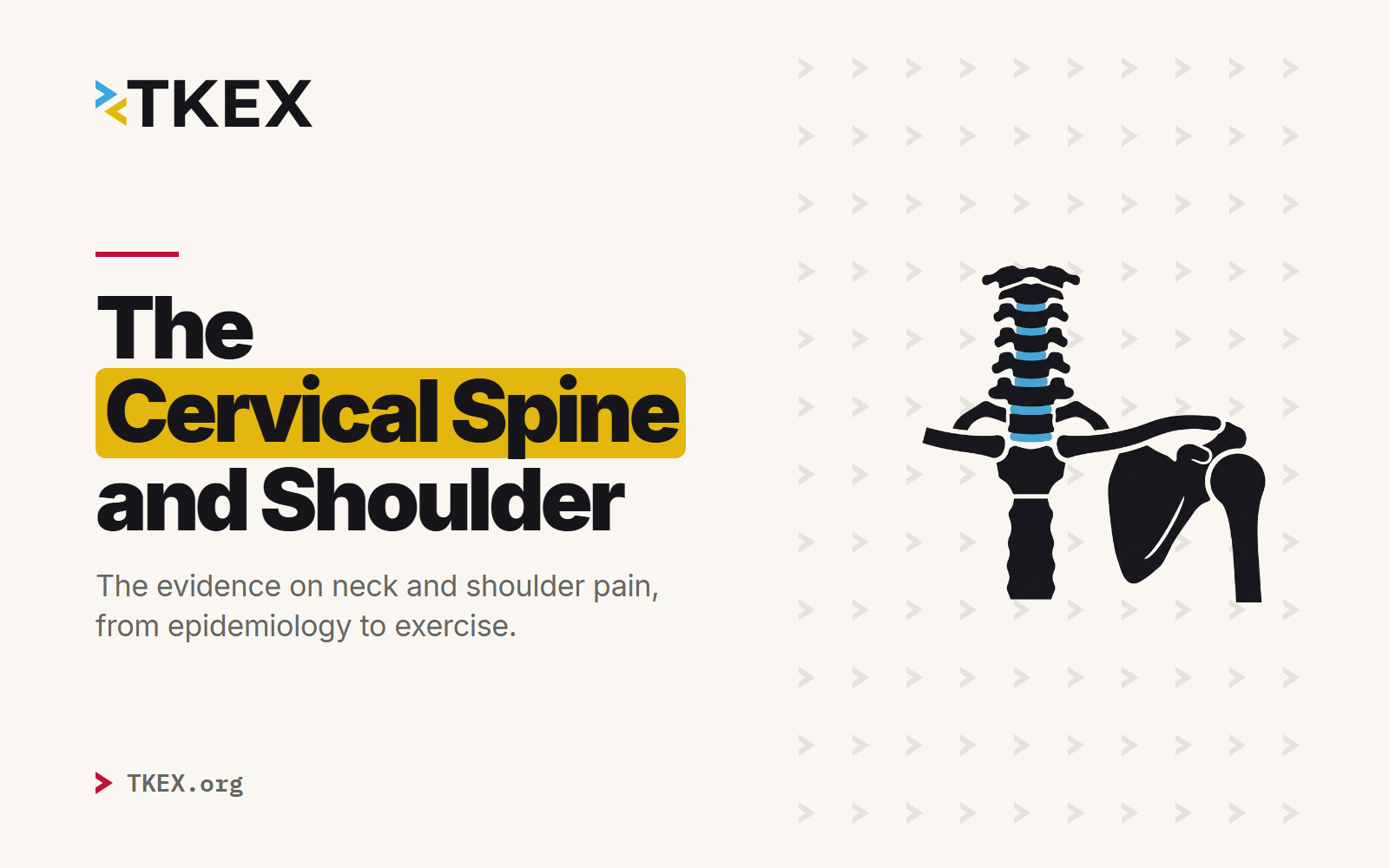
The Cervical Spine and Shoulder
A self-paced course on neck and shoulder pain and biopsychosocial clinical practice.
A$
699
inc GST
Prices are in Australian dollars. Checkout and course access are through Teachable.
About this course
A biopsychosocial approach to cervical spine and shoulder pain.
- Literature and epidemiology
- Psychologically informed practice including cognitive behavioural therapy, acceptance and commitment therapy
- Motivational Interviewing
- Exercise prescription incorporating movement variance and motor learning theories.
Curriculum
Section 1: Welcome
In this section, we want to know just a bit about you, your goals, and what drives you to do what you do! We will also give you a bit of a background about what motivates us to bring you these courses and what you can expect.
That’s when we get stuck into it.
This section examines critical thinking and logic. We consider why people may improve, which parts of care may be contributing and what may be getting in the way.
That’s what we will explore in this section and much more. We promise you will find this section thought-provoking!
Introductions (13:20)
Navigating the platform (4:58)
Definitions, philosophical frameworks & critical thinking (21:24)
Casual Conversations - 1 (28:46)
Section 2: Epidemiology and facts and myths of the neck
This module examines prevalence, imaging, clinical guidelines and movement for neck pain. We also consider common claims that may be unhelpful or overstated.
Epidemiology (17:07)
Imaging (8:00)
Guidelines (7:31)
Text neck and other archaic narratives (10:25)
Exercise considerations for neck pain (6:28)
Whiplash associated disorder (3:14)
Section 3: Red Flags
The course considers serious pathology and other reasons for further investigation without treating every unusual symptom as a red flag.
Red flags (13:51)
Section 4: Pain science and Biopsychosocial Practice
In this module we discuss the basics of the physiology that underpins tissue injury and pain, and how bio, psycho, and social factors can influence this biology. We then explore how our practice can evolve to reflect this science, and how we can apply this knowledge in the clinic.
The fundamentals of pain science (25:39)
A closer look at the biology (12:38)
Tissue injury and pain (7:26)
Placebo and Nocebo (25:48)
Biopsychosocial practice (15:17)
Casual Conversations - 2 (20:47)
Section 5: Predictive Processing - exploring perception and action
Perception involves inference. Information from the body is interpreted alongside prior experience, expectations and context.
Predictive processing offers one framework for considering this. It does not reduce pain to the brain or explain every person's experience on its own.
An introduction to perception (14:21)
A Bayesian perspective (13:16)
Perception and action (8:00)
Section 6: The common sense model to illness perception
Clients seek help because they have an issue. They attend with a set of beliefs and thoughts and feelings about their condition and future. They act and behave in certain ways to serve their survival needs. And all these factors can be complex and difficult to comprehend as an outsider (e.g., a clinician aiming to help).
In this module, we explore a useful framework for organising complex human experiences. The framework will enable you to navigate and develop, with the client, a coherent, values-driven, set of strategies to move towards recovery.
The model and its applications in the clinic (27:17)
Section 7: Facts and myths of the shoulder
This section examines common ideas about shoulder pain, including impingement, frozen shoulder and a history of dislocation.
We examine what the evidence supports, where claims have been overstated and where interpretation remains uncertain.
The aim is to help you decide which findings matter for the person in front of you.
Shoulder function, epidemiology, and basic anatomy (6:26)
Testing for shoulder pathology (4:50)
Shoulder impingement (14:16)
Shoulder imaging (6:57)
Scapula Dyskinesis (14:38)
Weak and painful shoulder presentations (14:25)
Shoulders with a history of dislocation (14:20)
Stiff and painful shoulder presentations (12:18)
Consistent factors in the treatment of shoulders (5:37)
Section 8: Practical communication skills
This section draws on motivational interviewing, Acceptance and Commitment Therapy and Cognitive Behavioural Therapy. Clinical examples are used to examine listening, validation and supporting change.
We will practise explanations that are accurate, useful and responsive to the person's concerns.
Fundamentals and the subjective assessment (37 min)
Experiential learning (6:32)
Debrief of clinical example (13:43)
Handling challenging scenarios (15:03)
Tying it all together (64:24)
Self-care & summary (11:17)
Section 9: Exercise and activity prescription
Movement can be useful for many reasons, including function, confidence and participation.
We will consider how to plan movement with the person rather than treating it as a generic prescription.
Graded activity (17:11)
Constraint-based learning & motor learning (14:21)
Constraint-based exercise ideas (25:52)
Symptom modification exercise ideas (29:45)
Casual Conversations - 3 (15:42)
Section 10: Some final words
The final module brings the course together and asks how the material changes your reasoning and practice.
Clinical footprint, mentorship and other resources (9:25)